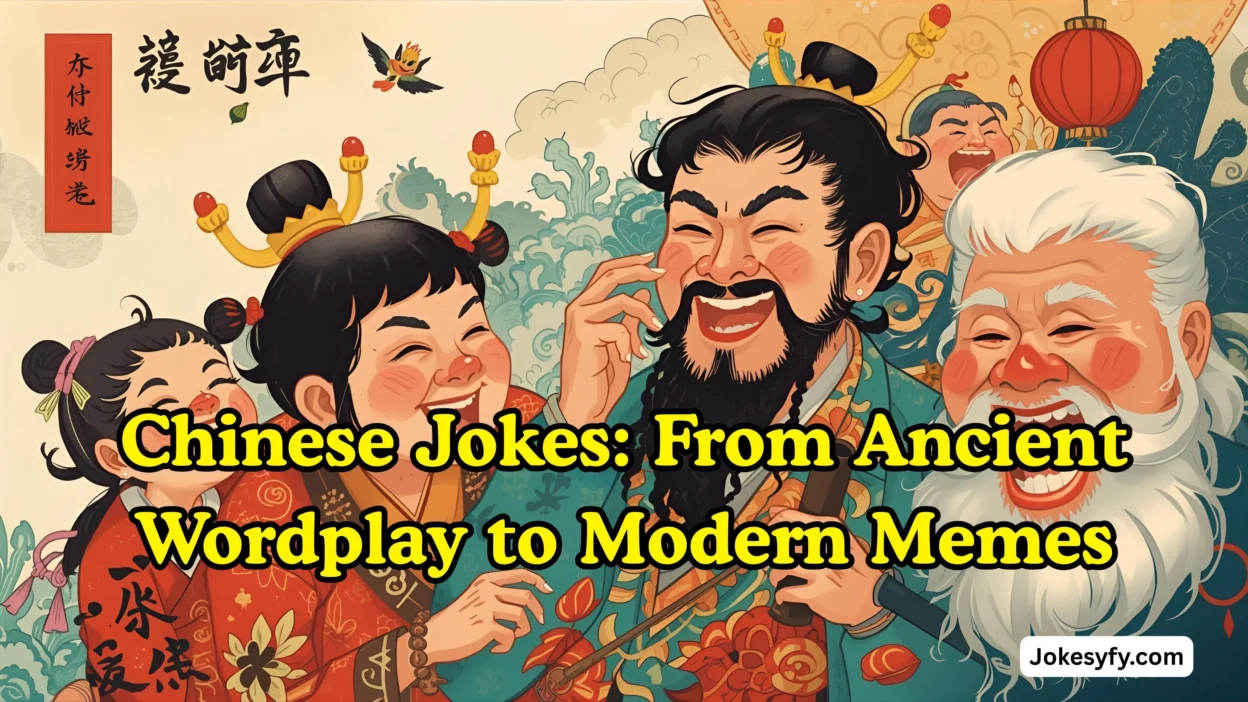
Cracking a joke in another language is the final boss of fluency. Chinese, with its tonal nuances, rich idioms, and vast cultural depth, offers a uniquely rewarding—and sometimes puzzling—world of humor. For learners and the culturally curious, understanding Chinese jokes is more than just getting a laugh; it’s a master key to the language’s logic and the Chinese way of thinking.
This guide will decode the mechanics of Chinese humor, from classic wordplay that has amused people for centuries to the viral memes dominating social media today.
Whether you’re a beginner trying to understand a pun or an advanced speaker aiming to craft your own witty remark, we’ll break down the categories, provide clear examples with translations, and share tips to help you not just “get” the joke, but truly appreciate the cleverness behind it. Let’s dive into the art of laughter, Chinese style.
Why Understanding Chinese Humor is a Game-Changer
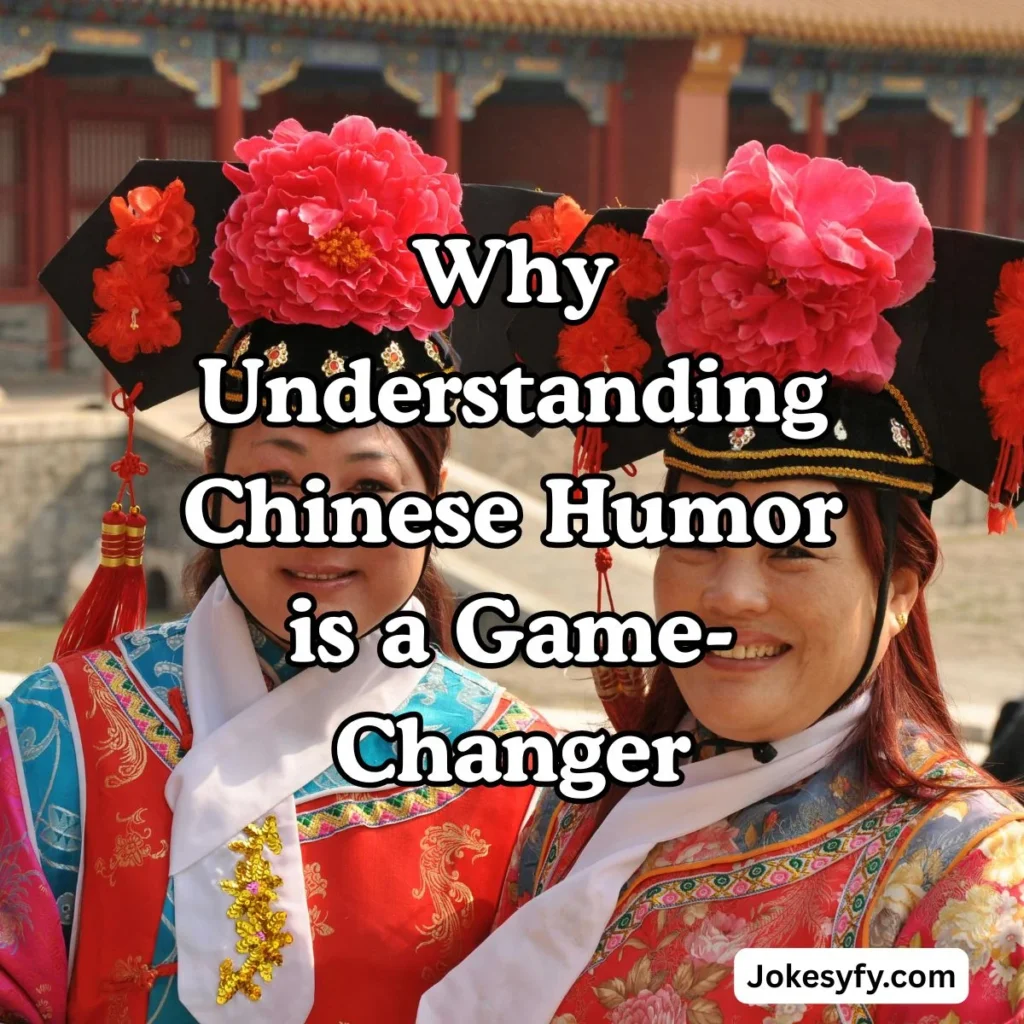
Mastering humor is a profound step in language acquisition. It’s not just about vocabulary; it’s about agility, timing, and cultural insight.
- 🤝 Deepens Connection: Sharing a laugh breaks down barriers. Using or appreciating a local joke instantly builds rapport and shows a deep level of cultural engagement.
- 🧠 Unlocks Language Nuances: Humor often lives in the gaps between literal and implied meaning. Getting a joke means you understand homophones, tones, idioms, and contextual meanings.
- 📚 Reveals Cultural Values: What a culture finds funny reflects its history, social norms, and collective psyche. Jokes can be a playful window into Chinese philosophy, family dynamics, and societal attitudes.
- 💡 Makes Learning Sticky: A hilarious phrase or a pun you finally decode is far more memorable than a word on a flashcard. Humor makes the learning process enjoyable and effective.
The Foundation: The Four Pillars of Chinese Wordplay (双关, Shuāngguān)
At the heart of countless Chinese jokes is shuāngguān, the art of the double entendre. This often hinges on the unique properties of the Chinese language.
- 1. Homophone Puns (同音词, Tóngyīn cí): The most common type. Chinese has many words with identical pronunciations but different meanings and characters.
- Classic Example: “为什么青蛙跳得比树高?因为树不会跳。” (Wèishémme qīngwā tiào de bǐ shù gāo? Yīnwèi shù bù huì tiào.) “Why can a frog jump higher than a tree? Because a tree can’t jump.” (Simple logic play, not a pun, but a classic joke structure).
- Pun Example: A shop selling watches (表, biǎo) might use the slogan “一表人才” (yī biǎo réncái), which literally means “a man of outstanding talent.” The pun is on 表 (biǎo, watch) and 表 (biǎo), which here means “appearance.” It humorously suggests their watches make you look talented.
- 2. Tonal Puns (声调, Shēngdiào): Changing the tone of a syllable changes its meaning—a goldmine for jokes.
- Example: The syllable “ma” can be 妈 (mā, mom), 麻 (má, hemp), 马 (mǎ, horse), or 骂 (mà, to scold). A joke might play on mishearing a tone in a noisy environment.
- 3. Polymorphic Characters (多义字, Duōyì zì): A single character with multiple meanings.
- Example: “闷” (mèn) can mean “bored” or “stuffy.” A joke: “夏天最热的时候,哪种门不能开? 闷门!” (Xiàtiān zuì rè de shíhòu, nǎ zhǒng mén bùnéng kāi? Mèn mén!) “During the hottest summer, which door can’t you open? The ‘stuffy/boring’ door!” (Here, 闷门 mènmén sounds like “a very stuffy door”).
- 4. Radical Deconstruction (拆字, Chāi zì): Breaking a complex character into its component parts to create a humorous explanation.
- Example: Explaining the character “富” (fù, rich) as “家里有一口田” (jiā lǐ yǒu yī kǒu tián), “a family with a field under its roof,” reflecting ancient agrarian values of wealth.
Cultural & Historical Jokes (文化笑话, Wénhuà Xiàohuà)
These jokes require knowledge of Chinese history, literature, or classic idioms and are a rich source of humor.
- 成语歪用 (Chéngyǔ Wāi Yòng): Twisting a classic four-character idiom.
- Example: “守株待兔” (shǒu zhū dài tù) means “to stand by a tree stump waiting for a rabbit”—to trust to chance and windfalls. A modern twist: “他在公司守株待兔,等老板给他升职。” (Tā zài gōngsī shǒu zhū dài tù, děng lǎobǎn gěi tā shēngzhí.) “He’s ‘waiting by the stump’ at the company, hoping his boss will give him a promotion.” It mocks passive behavior.
- 历史人物调侃 (Lìshǐ Rénwù Tiáokǎn): Light-hearted teasing of historical figures.
- Example: Jokes about the clever but mischievous minister 纪晓岚 (Jì Xiǎolán) outwitting the powerful minister 和珅 (Héshēn) are a staple, often highlighting wit over power.
- 地域笑话 (Dìyù Xiàohuà): Light-hearted regional stereotypes (similar to “Blonde jokes” in English).
- Note: These are handled with caution and are more about playful recognition of perceived traits (e.g., Shanghainese being meticulous, Northeasterners being straightforward) than mean-spirited mockery.
Classic Joke Structures & One-Liners
These are the workhorses of simple, shareable humor, perfect for learners.
- Question & Answer (问答式, Wèndá Shì):
- “什么东西肥得快,瘦得也快? 气球。” (Shénme dōngxī féi de kuài, shòu de yě kuài? Qìqiú.) “What gets fat fast and thin fast? A balloon.”
- “为什么考试天总是下雨? 因为考试的时候,每个人都在‘分洒’(分差)。” (Wèishémme kǎoshì tiān zǒngshì xià yǔ? Yīnwèi kǎoshì de shíhòu, měi gè rén dōu zài ‘fēn sǎ’ (fēn chā).) “Why does it always rain on exam day? Because during exams, everyone is getting a ‘scattered score’ (bad grade).” (Pun on 分洒 fēnsǎ, to scatter, and 分差 fēnchā, poor grade).
- Conversational Humor (对话幽默, Duìhuà Yōumò):
- A: “你会做菜吗?” (Nǐ huì zuò cài ma?) “Can you cook?”
- B: “我会吃菜。” (Wǒ huì chī cài.) “I can eat dishes.”
- Oxymoron & Paradox (矛盾式, Máodùn Shì):
- “我是最谦虚的人,这一点没有人能比得上我。” (Wǒ shì zuì qiānxū de rén, zhè yīdiǎn méiyǒu rén néng bǐ de shàng wǒ.) “I am the most humble person, and no one can match me in this.”
Modern & Internet Humor (网络梗, Wǎngluò Gěng)
The digital age has turbocharged the creation and spread of Chinese jokes. Memes and “梗” (gěng) are central.
- 谐音梗 (Xiéyīn Gěng): Homophone memes. These are wildly popular, often considered “dad joke” level but irresistible.
- Example: “你是什么垃圾?” (Nǐ shì shénme lājī?) “What kind of garbage are you?” This sounds like the Shanghai waste-sorting slogan, but is used jokingly to ask someone “What category do you belong in?”
- 表情包 (Biǎoqíngbāo): Memes and reaction images/GIFs, often with clever captions. The “金馆长” laugh or the “熊猫头” (panda head) are iconic templates.
- 段子 (Duànzi): Short, witty anecdotes or micro-stories shared on Weibo, WeChat, etc.
- 流行语 (Liúxíngyǔ): Catchphrases from viral videos, TV shows, or celebrity moments. For example, “芭比Q了” (Bābī Q le) from a gamer’s exclamation meaning “It’s over, barbequed” (i.e., we’re done for).
Jokes Based on Chinese Grammar & Measure Words
The technical aspects of the language itself can be funny.
- Measure Word Confusion: Using the wrong measure word can create silly images.
- Example: Using “一头人” (yī tóu rén, one head of person) instead of “一个人” (yī gè rén, one person) makes someone sound like livestock.
- Word Order & Ambiguity: “差点没” (chàdiǎn méi) can mean either “almost didn’t” or “almost did,” depending on context, leading to misunderstandings.
Jokes in Chinese Media: Sketches & Sitcoms
The tradition of comedic performance is strong.
- 相声 (Xiàngsheng): Cross-talk, a classic comedic dialogue between two performers featuring rapid wordplay, tongue-twisters, and satire.
- 小品 (Xiǎopǐn): Short, comedic skits, especially popular during the CCTV New Year’s Gala, often spoofing social trends or family life.
Jokes for & About Chinese Language Learners
These jokes acknowledge the shared struggles of learning.
- Tone Terror: “我要水饺 vs. 我要睡觉。” (Wǒ yào shuǐjiǎo. vs. Wǒ yào shuìjiào.) “I want dumplings. vs. I want to sleep.” A classic mix-up.
- Character Amnesia: Jokes about forgetting how to write a character the moment you put pen to paper.
- Literal Translation Fails: Like translating “心有余而力不足” (xīn yǒu yú ér lì bù zú) as “The heart has fish but strength is not enough” instead of “The spirit is willing, but the flesh is weak.”
The Art of Translating Chinese Jokes
Translation is an act of cultural negotiation. The goal is to convey the effect, not just the words.
- Untranslatable Puns: Often require a footnote explaining the homophone. Example: Translating a joke about 年年有鱼 (nián nián yǒu yú, have fish every year) for “surplus” requires explaining that 鱼 (yú, fish) sounds like 余 (yú, surplus).
- Cultural Substitution: Replacing an obscure cultural reference with a more familiar Western one that creates a similar humorous effect. (Use sparingly to avoid losing the “Chinese” flavor).
- Explanatory Translation: Sometimes, the best way is to translate literally and then add a brief, clear explanation in parentheses.
Common Themes in Chinese Humor
Identifying themes helps you anticipate the punchline.
- Modesty & Pride: Jokes about false modesty or boasting.
- Family Dynamics: Humor about strict parents, marriage pressure, or spoilt “little emperors.”
- Social & Work Life: Satire about 996 work culture, housing prices, or competitive education.
- Philosophical Play: Using Daoist or Buddhist concepts in a lighthearted way.
What’s Not Funny? Understanding Boundaries
Humor is culture-specific. Topics often avoided or handled with extreme care in public humor include:
- National Unity & Territorial Integrity: Any joke on these topics is highly offensive.
- Tragic Historical Events: Modern historical tragedies are not comedic material.
- Direct Mockery of Elders or Authority: Unlike in some Western satire, this is generally disrespectful.
- Crude or Vulgar Humor: While it exists, it is less common in mainstream, shareable public humor than in some cultures.
How to Practice & Use Chinese Jokes
- Start as a Collector: Keep a “joke journal” when you hear or read one. Note the pun or cultural reference.
- Master a Few Classics: Have 2-3 simple question-answer jokes ready to use. Delivery is key—practice the tones!
- Use Humor Appropriately: Start with self-deprecating humor about your own language mistakes. It’s safe and endearing.
- Be a Reactor: Even if you can’t tell a joke, learn to recognize setups. A good-natured “哈哈,我懂了!” (Hāhā, wǒ dǒng le! “Haha, I get it!”) goes a long way.
- Follow Chinese Meme Accounts: On Bilibili, Weibo, or Douyin, follow accounts that explain 梗 (gěng).
Resources to Find More Chinese Jokes
- Books: Look for 《笑话大全》 (Xiàohuà Dàquán, Complete Joke Books) or books on 歇后语 (xiēhòuyǔ, two-part allegorical sayings).
- Websites & Apps: Baidu Tieba (forums), Douban groups, or even some Chinese learning apps have joke sections. Apps like 星so offer clean browsing of Chinese websites and content.
- Social Media: Weibo hashtags like #搞笑 (#Funny), #段子 (#Witty Anecdotes). Bilibili for comedic videos and skits.
- TV Shows: Old episodes of 《春节联欢晚会》 (CCTV New Year Gala) for 小品 (xiǎopǐn), or modern variety shows like 《脱口秀大会》 (Tuōkǒuxiù Dàhuì, Rock & Roast).
Creating Your Own Simple Chinese Joke
It’s the ultimate achievement! Here’s a formula:
- Find a Homophone Pair: Start with a common word with a common homophone (e.g., 星 xīng, star, and 心 xīn, heart).
- Create a Simple Setup: “我最喜欢的东西在天上,也在我的身体里。” (Wǒ zuì xǐhuān de dōngxī zài tiānshàng, yě zài wǒ de shēntǐ lǐ.) “My favorite thing is in the sky and also in my body.”
- Reveal the Pun: “是星星吗?不对,是(我的)心!” (Shì xīngxīng ma? Bù duì, shì (wǒ de) xīn!) “Stars? No, it’s (my) heart!”
Conclusion: Your Journey to Laughing in Chinese
Navigating the world of Chinese jokes is a delightful journey that moves you from being a passive observer to an active participant in the culture. It begins with decoding the clever mechanics of wordplay and understanding the cultural weight behind a twisted idiom. As you progress, you start to appreciate the social commentary in a modern 段子 (duànzi) and the sheer creativity of internet 梗 (gěng). Remember, the goal isn’t just to memorize punchlines, but to develop the mental agility to follow the linguistic leaps that make Chinese humor so unique. Embrace the moments of confusion—they are where the deepest learning happens. Keep collecting jokes, practicing their delivery, and don’t be afraid to laugh at your own mistakes along the way. Soon enough, you’ll find yourself not just understanding the laughter in a room, but truly being part of it.
Frequently Asked Questions
Why are puns so common in Chinese jokes?
Chinese is a language rich in homophones—words that sound the same but have different meanings. This linguistic feature makes puns (双关 shuāngguān) a natural and highly effective foundation for humor, as they create instant, clever connections between unrelated concepts.
What are some classic Chinese joke formats I should know?
Two classic formats are the Question & Answer (e.g., “Why can a frog jump higher than a tree? Because a tree can’t jump.”) and Conversational Humor, which often features witty, short replies that play on logic or literal meanings. The 歇后语 (xiēhòuyǔ), a two-part allegorical saying where the first part sets up a riddle and the second reveals the answer, is also a traditional staple.
How has the internet changed Chinese humor?
The internet has drastically accelerated the creation and spread of humor through memes (表情包 biǎoqíngbāo) and catchphrases (梗 gěng). Platforms like Douyin (TikTok) and Weibo allow jokes and satirical formats, like the “Foolish Thursday” meme, to go viral almost instantly, creating a shared, constantly evolving cultural vocabulary.
Is it okay for a foreigner to tell Chinese jokes?
Absolutely, and it’s often greatly appreciated! The key is to start with self-deprecating humor or simple, classic jokes. Ensure you understand the context and that the joke isn’t on a sensitive topic. Your effort to engage through humor shows respect and a genuine interest in the culture.
What topics should I generally avoid in Chinese humor?
It is best to avoid jokes about national unity, territorial integrity, tragic historical events, or direct mockery of elders and authority figures. While social satire exists, humor that could be seen as undermining social stability or disrespecting core cultural values is considered highly offensive and should be avoided.

I am Charles K Baxter, a humor enthusiast passionate about spreading joy and positivity through laughter.