The term “sissy” carries a heavy weight, often used as a childhood taunt or a homophobic slur to police masculinity. Yet, in certain contexts sissy jokes have also become a form of self-expression within online and LGBTQ+ communities.
This guide delves into the complex duality of this term, exploring its painful history as a weapon of bullying, its controversial role in media, and its modern reincarnation as a trend in social media captions.
We’ll navigate the fine line between harmful humor and empowering reclamation, providing context to understand this multifaceted phenomenon.
The Problematic Roots: ‘Sissy’ as a Slur and Bullying Tool
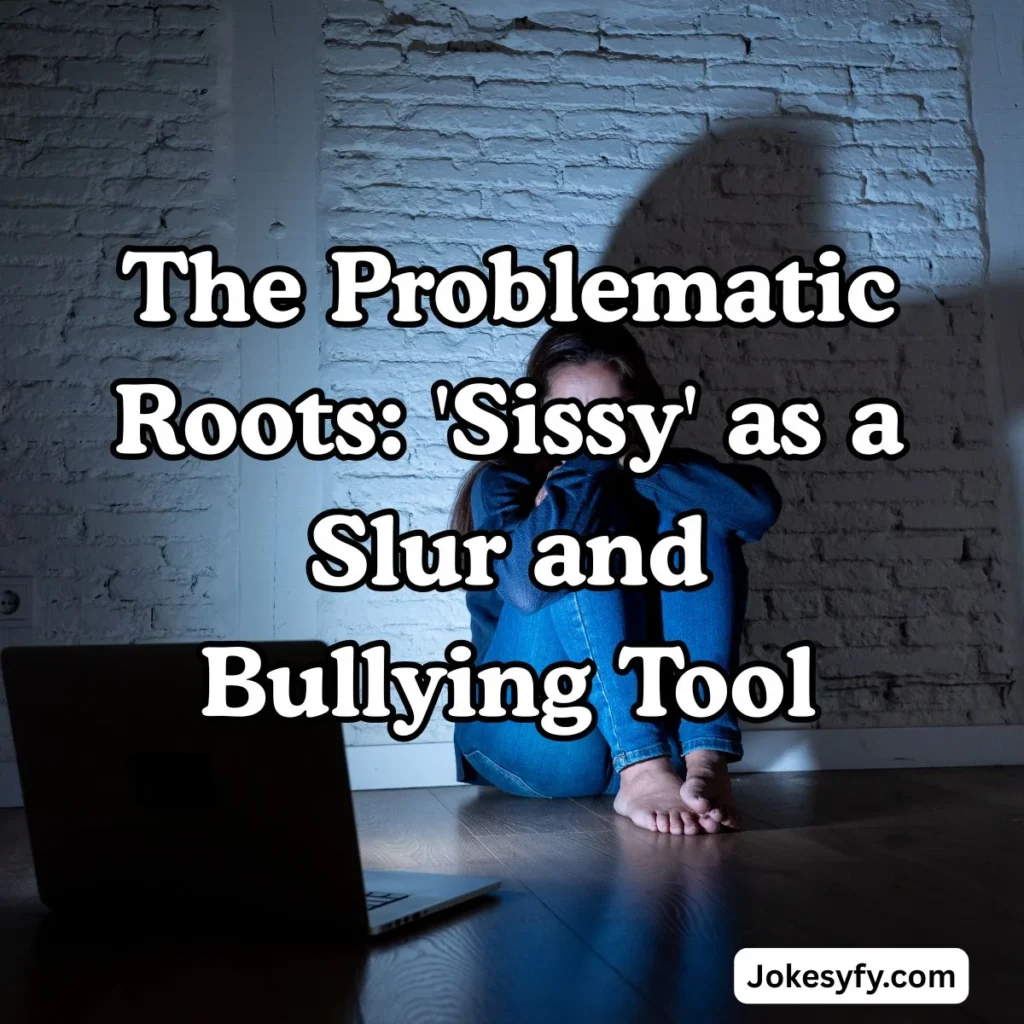
Historically, “sissy” is a derogatory term aimed at boys or men perceived as not being sufficiently masculine—showing emotion, enjoying activities coded as feminine, or being perceived as gay. Its use is deeply rooted in homophobia and misogyny, equating femininity in men with weakness and inferiority.
- 🎯 Childhood Trauma: For many, especially gay men, it’s a painful word heard on playgrounds. A classic joke structure highlights this: “A young boy came home from school and told his mother, ‘I had a big fight with my classmate. He called me a sissy.’ The mother asked, ‘What did you do?’ The boy replied, ‘I hit him with my purse!'” . The humor here is dark, underlining the no-win situation the taunt creates.
- ⚖️ Workplace Harassment: This is not just child’s play. The term can be central to serious workplace harassment and sexual discrimination, as seen in a case where a CEO used “gay jokes” and the dynamic of being called a “sissy” to ridicule an employee, creating a hostile environment .
- 📺 Media Perpetuation: Critics have called out popular sitcoms like Modern Family for using “sissy” as a casual, homophobic insult between family members, normalizing the slur under the guise of comedy .
- 🔨 Policing Gender: The term is a tool of toxic masculinity, used to enforce rigid gender norms. Jokes or statements like “ballet is for sissies” or “cooking is for sissies” directly devalue activities associated with femininity .
- 💔 Lasting Impact: Being labeled a sissy can lead to profound shame, internalized homophobia, and mental health struggles, forcing individuals to hide their true selves to avoid ridicule.
The Other Side: Reclamation, Role-Play, and Modern Subculture
In a powerful counter-narrative, some within the LGBTQ+ and BDSM/kink communities have reclaimed and repurposed the term. Here, “sissy” can denote a specific consensual role or identity related to feminization, submission, and the joyful exploration of gender expression.
- 🌈 Reclaimed Identity: Similar to the reclamation of “queer,” some individuals adopt “sissy” as a proud, self-chosen label. This is explored in theatrical works like “Southern Baptist Sissies,” a play that delves into the coming-of-age stories of gay men in a fundamentalist church environment .
- 🎭 Consensual Role-Play: Within kink, “sissification” is a fantasy where individuals (often male-identifying) consensually take on a hyper-feminine, submissive role. The “jokes” or humor here are often intimate, playful, and part of a dynamic between partners.
- ✨ Focus on Empowerment: For participants, this can be an act of gender liberation and self-discovery, finding freedom and euphoria in embracing femininity without shame. It turns the insult on its head.
- ⚠️ Critical Nuance: This reclamation is complex and not universally accepted. Many still find the term irredeemably offensive. Context, consent, and who is using the term are everything.
From Taunt to Trend: The Rise of ‘Sissy Captions’ on Social Media
A major modern evolution is the rise of “sissy captions.” This is largely unrelated to traditional joke-telling. These are short, stylized, often provocative or playful lines of text paired with images on platforms like Instagram, TikTok, and dedicated forums .
- 💄 Thematic Content: These captions revolve around themes of femininity, submission, empowerment, and aesthetic beauty. They use imagery of lace, bows, lipstick, heels, and dolls .
- 🎯 Purpose-Driven: They serve multiple purposes: expressing identity, enhancing a fantasy role-play scenario, driving engagement on social posts, or simply sharing a confident, cheeky vibe .
- 📈 A Social Media Phenomenon: This trend is massive. Guides offer “350+ Sissy Caption Ideas” categorized by mood—funny, flirty, cute, severe, aesthetic, and empowering—for use in 2025 .
- 🔀 Blurred Lines: While distinct from insulting “jokes,” this trend absorbs the term’s energy and repackages it for digital, often commercial, consumption. It represents the term’s journey into a niche internet aesthetic.
Analyzing Classic ‘Sissy Joke’ Structures and Their Meaning
Traditional jokes that use the “sissy” trope often follow predictable patterns that reveal societal anxieties about gender.
- The “Inadequate Man” Punchline: The humor relies on a man failing at a masculine task or reacting in an “unmanly” way (e.g., crying, being scared). The joke reinforces the stereotype that men should be stoic and competent.
- The “Feminine Retaliation” Twist: As in the “purse” joke , the punchline involves using a feminine-coded object as a weapon. The humor is ironic, highlighting the absurdity of the gender trap.
- The “Activity is for Sissies” Set-Up: A repetitive structure (e.g., “ballet is for sissies,” “cooking is for sissies”) showcases how masculinity is narrowly defined by arbitrarily excluding certain hobbies.
- The “Hyper-Masculine Denial”: Jokes among soldiers or athletes where one calls another a “sissy” for a perceived weakness (like a specific way to kill a scorpion) are about policing in-group masculinity .
- Underlying Message: These structures rarely challenge the stereotype. Instead, they either affirm it for a laugh or, in rarer cases, use absurdity to subtly critique its rigidity.
When Lines Are Crossed: Sissy Jokes as Harassment and Discrimination
It is crucial to distinguish between poor-taste humor and legally/socially actionable behavior. Using “sissy” or related gay jokes in certain contexts constitutes harassment.
- 🏢 Hostile Work Environment: The StackExchange case is a textbook example. A CEO making graphic, suggestive “gay jokes” about an employee and physically grabbing him created an environment of intimidation and abuse .
- ⚖️ Legal Recourse: As advised in that case, victims of such sexual harassment and assault in the workplace are often told, “You need a lawyer” because HR’s primary duty is to protect the company . This can be framed as constructive dismissal if the treatment forces an employee out .
- 🎭 Power Dynamics: The harm is amplified by power imbalances (boss/employee, popular kid/outcast). The “joke” is not a joke when the target cannot safely object.
- 🚫 Not “Just Banter”: Perpetrators often dismiss criticism by claiming it’s “just jokes” or “lads’ culture.” This defense minimizes the real psychological harm and upholds a culture of toxic masculinity .
The Evolution in Pop Culture: From Casual Slur to Critical Examination
Media representation has shifted, albeit unevenly, from uncritical use of the slur to more nuanced explorations.
- 📀 Retrospective Criticism: Modern re-watches of hit shows like Modern Family now highlight its problematic use of “sissy” and other homophobic and racist jokes, which were initially glossed over for comedy .
- 🎬 Reclamation Narratives: Plays like “Southern Baptist Sissies” use the term front-and-center to tell authentic stories of gay trauma and identity within religious environments, forcing audiences to confront the word’s power .
- 🎤 Comedic Re-framing: Comedians like Leanne Morgan have used the term in a self-deprecating way (e.g., “I was too sissy for the military”) , divorcing it from gender and applying it to a general lack of toughness, which represents a different, though not uncomplicated, usage.
- 📖 The Takeaway: Pop culture now serves as both a record of the term’s harmful past and a forum for processing and reclaiming it.
The 2025 Social Media Guide: Categories of Sissy Captions
For those engaging with the modern caption trend, content is highly categorized. Here are the key genres, drawing from current guides .
- 😉 Flirty & Playful: “Blush deeper when you call me yours 💖”, “Yes, sir… but prettier 💋” . Designed to tease and entice within a consensual dynamic.
- 😂 Funny & Relatable: “Powered by lipstick and bad decisions 💄”, “Cry in heels, smile in selfies 😘” . Uses humor about the aesthetic or lifestyle.
- 🌸 Cute & Aesthetic: “Bubblegum heart, lace dreams 💕”, “Dreams painted in blush and silk 🎀” . Focuses on soft, beautiful, and doll-like imagery.
- 🔥 Severe & Empowering: “Bow down, beauty’s in charge 👑”, “Not weak, just wrapped in lace” . Flips the script, associating femininity with power and dominance.
- 💖 Romantic & Devotional: “Every ribbon ties me closer to you 🎀”, “Kneeling in lace, rising in love” . Expresses submission and affection within a romantic context.
- 📲 For Engagement: “Double-tap if you’d obey 💋”, “Your algorithm just blushed 🌸” . Captions explicitly crafted to boost likes and comments on platforms like Instagram.
How to Write Captions in the Modern Style (2025)
If you’re creating content within this niche, follow these contemporary tips derived from current practices .
- 🎭 Start with Core Emotion: Identify the feeling—sass, devotion, blushy shyness, powerful command—and build from there.
- 🖼️ Use Vivid Imagery: Incorporate specific nouns: lace, stilettos, silk, pearls, corsets, lipstick, collars, bows. Make it visual.
- ⚡ Employ Contrast: Juxtapose ideas for impact: “soft outside, steel inside” or “cute but dangerous.”
- ✍️ Keep it Concise: Impact lies in brevity. Aim for one sharp line or a very short phrase.
- 🔄 Play with Rhythm: Use alliteration (“pout, pose, repeat”) or repetition for a catchy, memorable quality.
- 😊 Master the Emoji: Use 1-2 relevant emojis as punctuation or to replace words (e.g., 💋👠🎀). They are essential to the genre’s language.
- 📱 Platform Awareness: TikTok favors edgy, fast-paced text; Instagram prefers cohesive aesthetics; dedicated forums allow for more explicit or niche content.
- ✅ Be Original: Avoid overused clichés. Put a personal spin on common themes to stand out.
Navigating the Ethical Minefield: When to Avoid This Humor
Given its history, extreme caution is required. Here are clear situations to avoid “sissy” jokes or captions.
- 👥 Directed at Someone Else: Never use the term to describe, joke about, or label another person without their explicit, enthusiastic consent.
- 💼 In Professional Settings: Absolutely off-limits in workplaces, emails, or professional networking. The risk of creating a hostile environment is high .
- 🌐 With Unfamiliar Audiences: You cannot assume others share your view of the term as reclaimed. What’s empowering to you may be deeply offensive to them.
- 🧒 Involving Children: Do not use the term to police a child’s behavior or interests (e.g., “don’t cry, don’t play with that, it’s for sissies”). This is deeply damaging.
- 🎭 As a Generic Insult: Using “sissy” to mean “weak” or “cowardly,” even without gendered intent, perpetuates the underlying misogynistic association.
Psychological Impact: The Effects of Being the Target

Understanding the harm requires looking at the lasting psychological scars.
- 😞 Internalized Shame: Leads individuals to hate their own natural traits, interests, or sexual orientation, viewing them as flaws.
- 🛡️ Hyper-Masculine Overcompensation: Some men may engage in aggressive, risk-taking, or misogynistic behavior to “prove” they are not a “sissy.”
- 🚪 Social Withdrawal: Fear of ridicule can cause people to abandon hobbies, hide their true personality, and isolate themselves.
- 💔 Anxiety and Depression: Chronic bullying and rejection based on identity are significant risk factors for mental health disorders.
- 🌈 Complicated Coming Out: The association between being gay and being a “sissy” can add an extra layer of fear and confusion to the coming-out process.
Parental Guide: Responding to “Sissy” as a Taunt
If your child is using or being called this word, here’s how to respond constructively.
- 🤝 Discuss, Don’t Just Forbid: Explain why the word can be hurtful. Ask, “What were you trying to say when you used that word?” or “How did it feel when someone said that to you?”
- 🚫 Challenge Gender Stereotypes: Explicitly state that there’s no such thing as “boy things” or “girl things.” Interests and emotions are human.
- 💪 Focus on Character, Not Gender: Praise kindness, creativity, perseverance, and curiosity—traits unrelated to gender norms.
- 📚 Use Media as a Teachable Moment: If you hear the word in a show or movie, pause and discuss its context. Ask, “Was that used as a joke? Who was it hurting?” .
- 🛡️ Empower with Responses: Role-play with your child on how to confidently respond to taunts, whether with a simple “That’s not cool,” humor, or walking away.
The Role of Sissy Humor in LGBTQ+ Communities
Within some LGBTQ+ circles, the dynamic is different, involving complex reclamation and in-group humor.
- ✨ A Badge of Honor: Some use it proudly to acknowledge a history of being perceived as gender-nonconforming and to celebrate surviving that stigma.
- 🎪 Camp and Drag Culture: The exaggerated, theatrical embrace of femininity in drag has historical ties to mocking gender norms. “Sissy” humor can be part of this camp aesthetic.
- ⚠️ Not a Monolith: There is significant debate. Many LGBTQ+ people, particularly older generations who experienced violence associated with the word, reject any attempt to reclaim it.
- 🤝 The Consent Factor: In-group use relies on shared experience and implied consent. The same joke told by an outsider would likely be seen as hostile.
From Harmful Stereotype to Personal Empowerment: A Case Study
The journey of the term is encapsulated in the story of the play “Southern Baptist Sissies.”
- 📖 Personal Narrative: Playwright Del Shores, a preacher’s son, uses the provocative title to force attention onto the coming-of-age struggles of gay men in a repressive religious culture .
- 🎭 Transforming Trauma: The play takes the slur used to hurt its characters and makes it the central subject of their story, thereby attempting to wrest control of the narrative.
- 💬 Critical Reception: Reviews note the play’s importance in giving voice to this experience, even while critiquing its script, proving that the act of confrontation itself is powerful .
- 🔑 The Lesson: This represents the highest-potential path for the term: from a weapon used by others to a subject of one’s own authentic story.
Frequently Asked Questions About Sissy Jokes and Captions
Q: What is the difference between a ‘sissy joke’ and a ‘sissy caption’?
A: A traditional sissy joke is a spoken joke where the humor is based on mocking a man for being feminine or weak. A sissy caption is a modern social media trend—a styled, often positive or playful line of text about embracing femininity, used alongside a photo or post, not necessarily as a joke .
Q: Can using ‘sissy’ ever be okay?
A: Context is everything. It may be acceptable in very limited contexts: 1) Self-identification: When an individual chooses it for themselves. 2) Consensual in-group use: Within communities that have explicitly reclaimed it (with caution). 3) Academic/artistic discussion: When analyzing the term’s history or impact. It is almost never okay when used by an outsider to describe someone else.
Q: What should I do if I’m harassed at work with gay or ‘sissy’ jokes?
A: Document everything in detail (dates, times, witnesses, what was said). Consult with an employment lawyer before reporting internally, as HR may prioritize the company’s interests . Understand your rights regarding sexual harassment and constructive dismissal.
Q: Why are ‘sissy captions’ so popular on Instagram/TikTok?
A: They tap into trends of aesthetic branding, niche identity expression, and engagement-driven content. They allow users to project a specific, bold persona that can attract like-minded followers and high levels of interaction in a crowded digital space .
Q: How has pop culture’s use of the term changed?
A: There’s a shift from uncritical, casual use as a punchline (e.g., in older sitcoms ) to more intentional use: either in critical re-examinations of past media or in reclaiming narratives (e.g., in theater ) that explore the term’s damage and potential for empowerment.
Conclusion: Navigating a Loaded Term with Awareness and Respect
The world of “sissy jokes” is a microcosm of broader societal struggles with gender, power, and language. It spans from the schoolyard bully’s cruel taunt to the consensual digital persona of a social media creator. Understanding this spectrum is key to navigating the term with intelligence and sensitivity. The core takeaway is that intent and context define impact. What might be an empowering reclamation for one person remains a painful slur for another. Moving forward, whether engaging with modern caption trends, analyzing media, or simply communicating, prioritizing respect, consent, and an awareness of the word’s heavy history is essential. True humor unites rather than isolates, and true empowerment allows everyone to define their own identity, free from the constraints of worn-out and harmful stereotypes.

I am Charles K Baxter, a humor enthusiast passionate about spreading joy and positivity through laughter.